 by
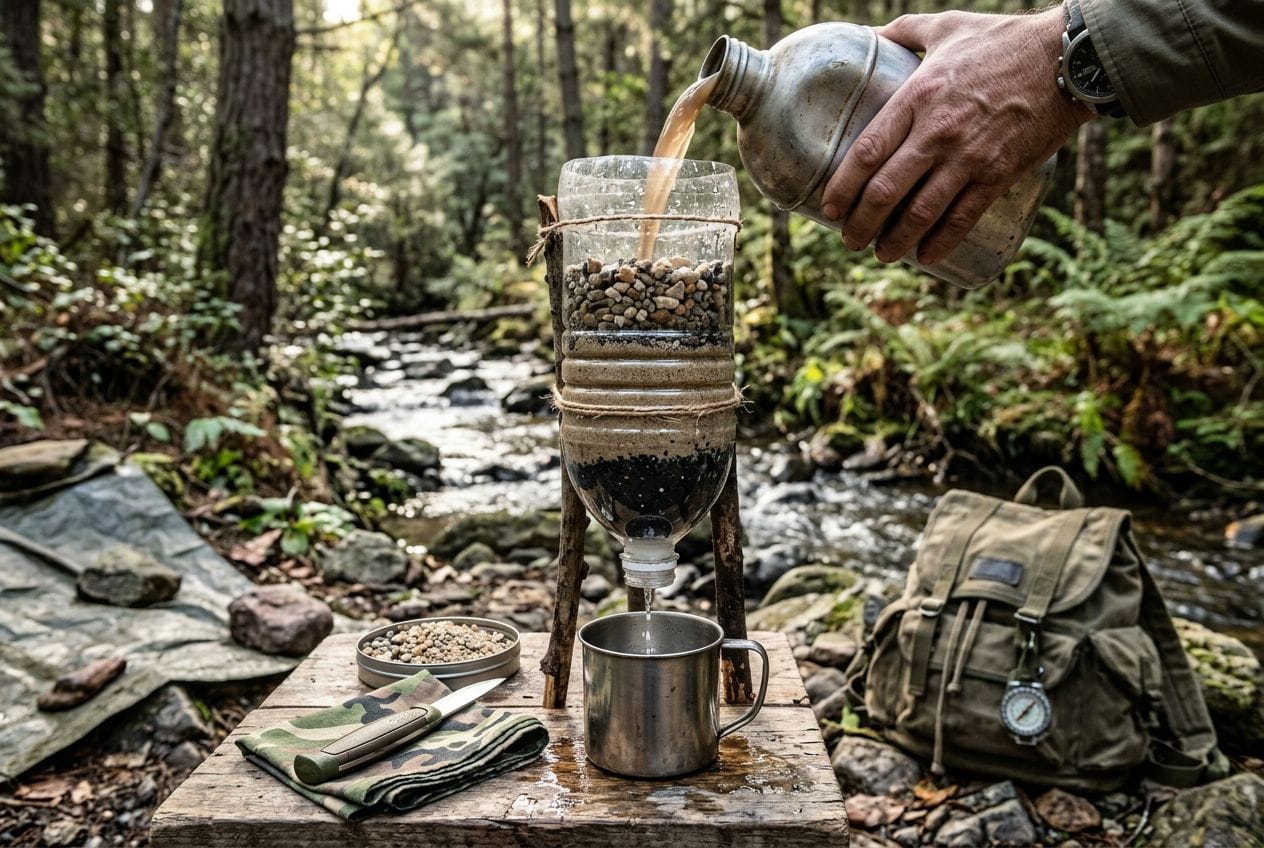
by Safe water is a crucial necessity for human life; however, not everyone has access to clean, purified water. That’s precisely why it’s beneficial to understand the simple yet effective sand-water filtration method, which transforms murky, unsafe water into clear, drinkable water. This process not only quenches thirst but could also save lives in emergency situations. This narrative is perfect for those keen to explore the principles of filtration, gather the necessary materials, and assemble their very own sand-water filter.
In the outdoors, using a water filter on the trail is considered standard gear. This article takes it a step further, explaining how to create a sand water filter for long-term use.
Table of Contents
Understanding the basic principles of filtration
The Basic Principles of Filtration
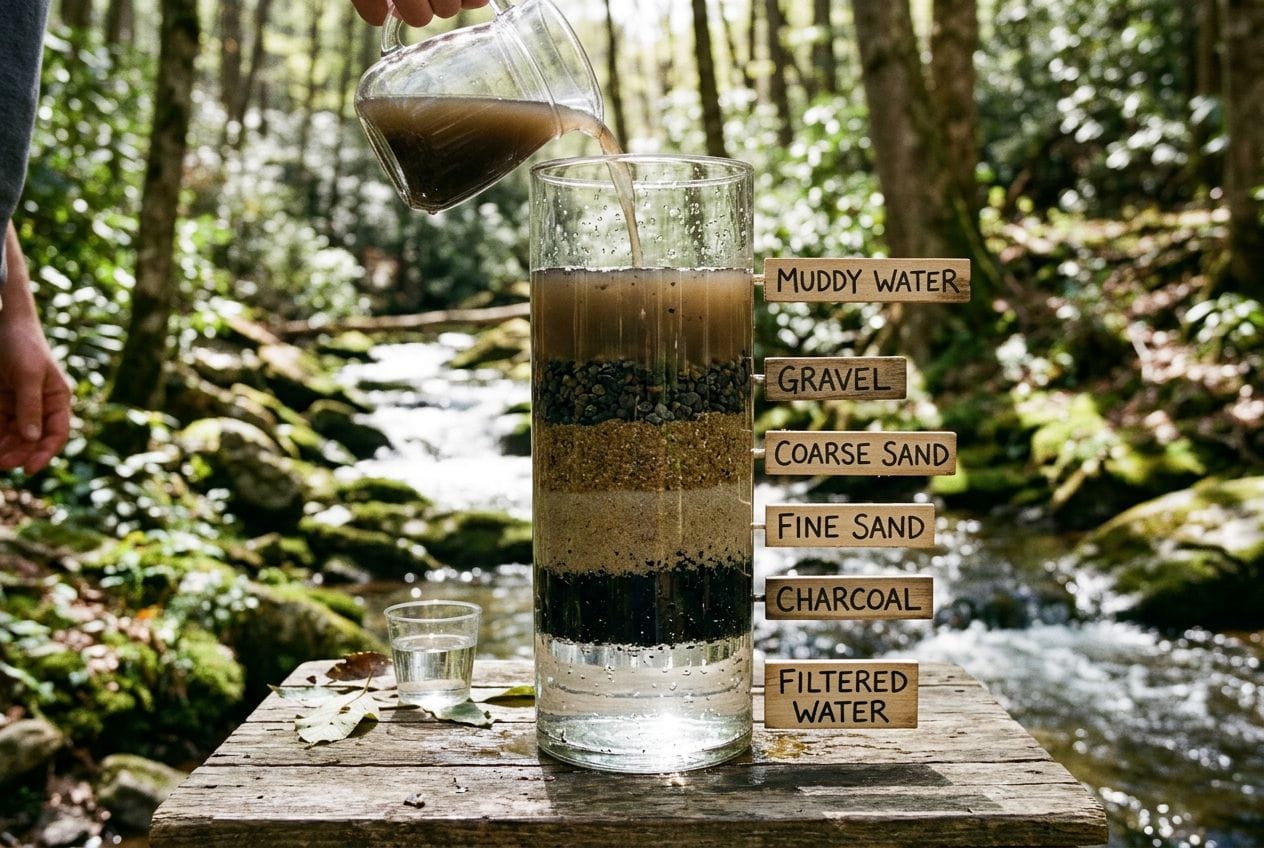
Filtration is a process that involves removing solid particles from a fluid, such as air, gas, or liquid. The essence of this process lies in a filtration medium that intercepts and collects unwanted particles. Filters function according to two dominant principles: sieving and depth. Sieving occurs when particles are larger than the spaces within the filter, and depth filtration occurs when fine particles penetrate the filter to some degree and are captured within it.
Understanding the Filtration Media
The filtration media is generally a porous material that acts as a screen to separate solid impurities from the original fluid. The pore size of the media controls the size of particles that can pass through. Filtration media can be made from a variety of materials, including but not limited to fabric, paper, metal, glass, and plastic. The media can be rigid or flexible, thin or thick, depending on the specific filtration application.
Sedimentation and Its Role in Filtration
Sedimentation is a phase of filtration where the force of gravity acts on denser substances suspended in a fluid, causing them to sink. This process aids in the gradual separation of solids from liquids, decreasing the amount of larger particulate matter that passes through a filter medium. Sedimentation is especially useful for filtering out heavy metals and other dense particles from water, which can be harmful to health if consumed.
Filtration in Water Purification
Among the many uses of filtration, one significant application is in water purification. Water filters help remove algae, fungi, bacteria, viruses, and other harmful substances, producing safer water for drinking or other uses. Constructing a sand water filter exemplifies this process on a small scale.
Making a Sand Water Filter
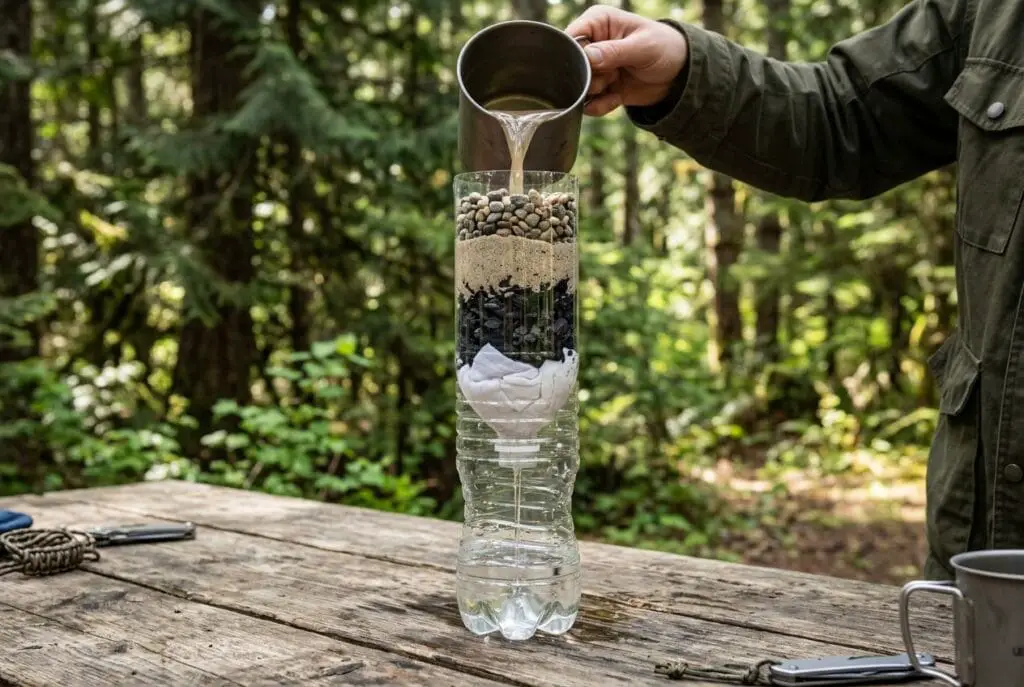
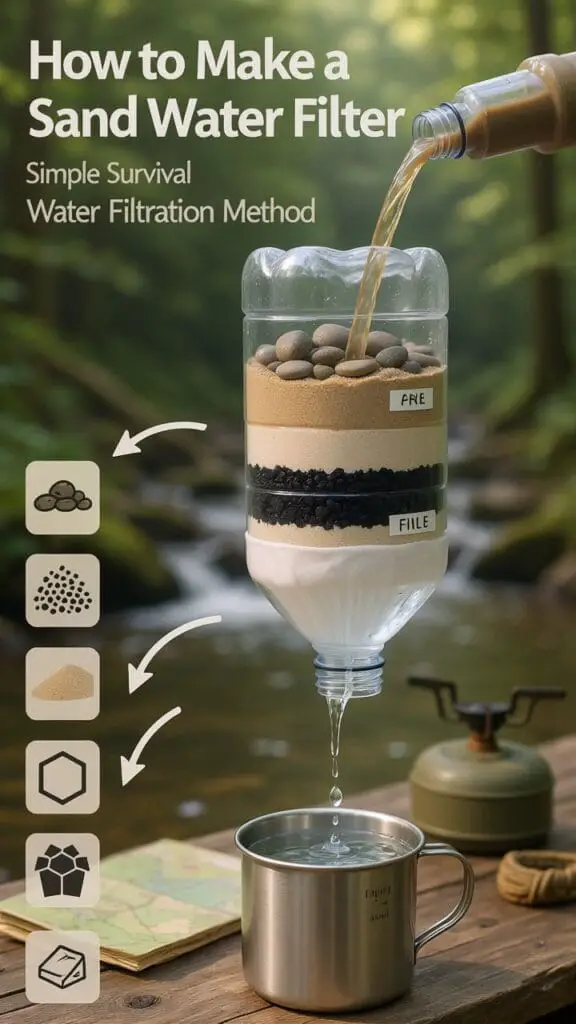
To construct your sand water filter, you’ll need a plastic bottle or similar container, some quarry stones, fine and coarse sand, activated charcoal, and a cloth or coffee filter. First, cut the bottom off your bottle and turn it upside-down. Cover the bottle opening with the cloth. This prevents the sand and charcoal from escaping but allows the water through. Above the cloth, add a layer of activated charcoal, then a layer of coarse sand, and finally a layer of fine sand. Finally, add a layer of stones at the top. Pour the water to be filtered into the bottle, allowing it to seep through the layers. Each layer removes different-sized contaminants, resulting in cleaner water. Rinse the layers periodically, and replace them as needed.
Remember: This method will not sterilize the water, but it will help to remove particulates and impurities. Always ensure water is safe before consumption.
Gathering Materials for a Sand Water Filter
First, let’s focus on sand, the primary material for the filter. It is crucial to use fine sand rather than coarse sand for more accurate filtration. Fine sand can easily be found at home improvement stores or online. Look for ‘play sand’ or ‘aquarium sand,’ which is typically fine sand.
Gravel is the next component. This will act as a support layer for the sand. Medium or pebble-sized gravel is ideal. It’s important to wash the gravel thoroughly to remove any dust or small particles. Pebble-sized gravel is easily accessible at home improvement stores or garden centers.
As for activated charcoal, it improves the taste of filtered water and reduces minor impurities. Activated charcoal comes in different forms. For our purposes, granulated activated charcoal would be ideal, available at pet stores (where it’s used for fish tanks), some health food shops, and numerous online retailers.
A plastic bottle or a similar container serves as the platform for this filter. An old drinking bottle, large soda bottle, or any sturdy plastic bottle would suffice. Ensure that it is washed and dried well before use. If it previously contained sugary liquids, make certain to clear all traces, as they may affect your filter’s performance.
Finally, we need a piece of clean cloth or cotton to stop large contaminants and distribute the water evenly over the sand. This could be cut from an old t-shirt or similar material, as long as it’s clean.
Remember, sourcing high-quality materials is vital for an effective sand-water filter. So, put a little time and effort into gathering these materials to ensure the best filtering outcomes.
Assembling and using a sand water filter
Materials Needed
- Two plastic water bottles or two buckets
- A Knife or something sharp
- A small piece of cloth or bandana
- Clean fine sand
- Clean gravel
- Activated charcoal
Assembling the Filter
First, you need to cut the bottom off one of the plastic bottles or buckets. This will serve as your main filtration device. Into this container, you’ll be adding the layers of sand, gravel, and activated charcoal.
Next, place the piece of cloth or bandana at the bottom of the cut-off bottle or bucket. This will prevent the sand and gravel from falling through the cuts in the next step.
Start by adding a layer of activated charcoal as the first layer inside the cut bottle or bucket. Charcoal helps remove many organic compounds and chlorine from the water.
Above the charcoal, add a layer of clean, fine sand. Sand will help to remove smaller particles from the water.
Then, add a layer of clean gravel on top of the sand. The gravel will filter out larger particles and debris from the water.
Finally, position the second bottle or bucket so it receives the filtered water, and place the assembled filter over it.
Ensure the top bucket or bottle has the cap affixed so no unfiltered water accidentally mixes with the filtered water.
Using the Filter
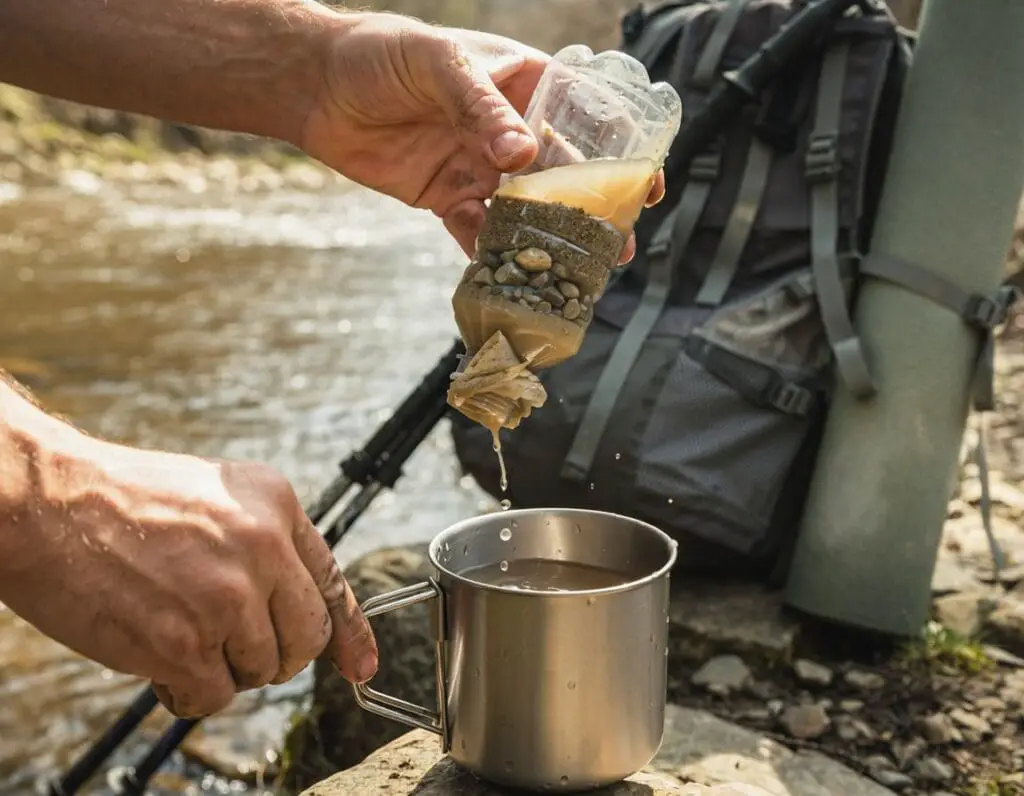
Pour the water you want to filter into the top of your assembled filter. It will filter through the layers of gravel, sand, and charcoal, and into the second bottle or bucket.
Bear in mind that the water’s flow through the filter will be relatively slow.
Maintaining the Filter
Ideally, this sand filter should be used for filtering clear, relatively clean water. If you’re filtering murky water, the sand might clog quickly, slowing the process.
After several uses, or if you notice the water is not filtering through as quickly as before, it’s probably time to clean your filter. This can be done by disassembling the filter and replacing or cleaning the sand and gravel.
Remember to carefully dispose of the old sand and gravel if they are heavily contaminated. Always ensure you use clean materials when reassembling the filter.
Filtering water this way can significantly improve its clarity. However, it does not remove all potential waterborne pathogens, so it’s recommended to boil the water after filtering if it’s for drinking purposes.
Final Thoughts About Using a Sand Water Filter
By understanding the basic principles of filtration and the resources needed to build a sand-water filter, you can play an integral role in ensuring that you and your surrounding communities continue to have access to clean water. Besides, it’s not just about creating a simple tool for basic water purification; it’s about honing a valuable skill set that could be the difference-maker in circumstances where one’s very survival depends on clean drinking water. Therefore, with knowledge of assembling and maintaining a sand-water filter, you are well-equipped to meet water purification needs in various situations. So get ready to turn unfiltered water into a safe drink, using nothing more than basic resources and the power of knowledge.